The first thing you notice is the noise. Gloves on pads. Feet on canvas. The rhythmic percussion of a jump rope and, underneath it all, the quiet voice of a coach counting out combinations. It is not loud. It is focused. And in a town where too many young people are told, in a hundred quiet ways, that they do not quite fit, focus is a form of respect.
This is Wallop Boxing Club in Redditch. And what happens inside its walls is, I would argue, some of the most important community work being done in our town right now.
The Mayor calls in
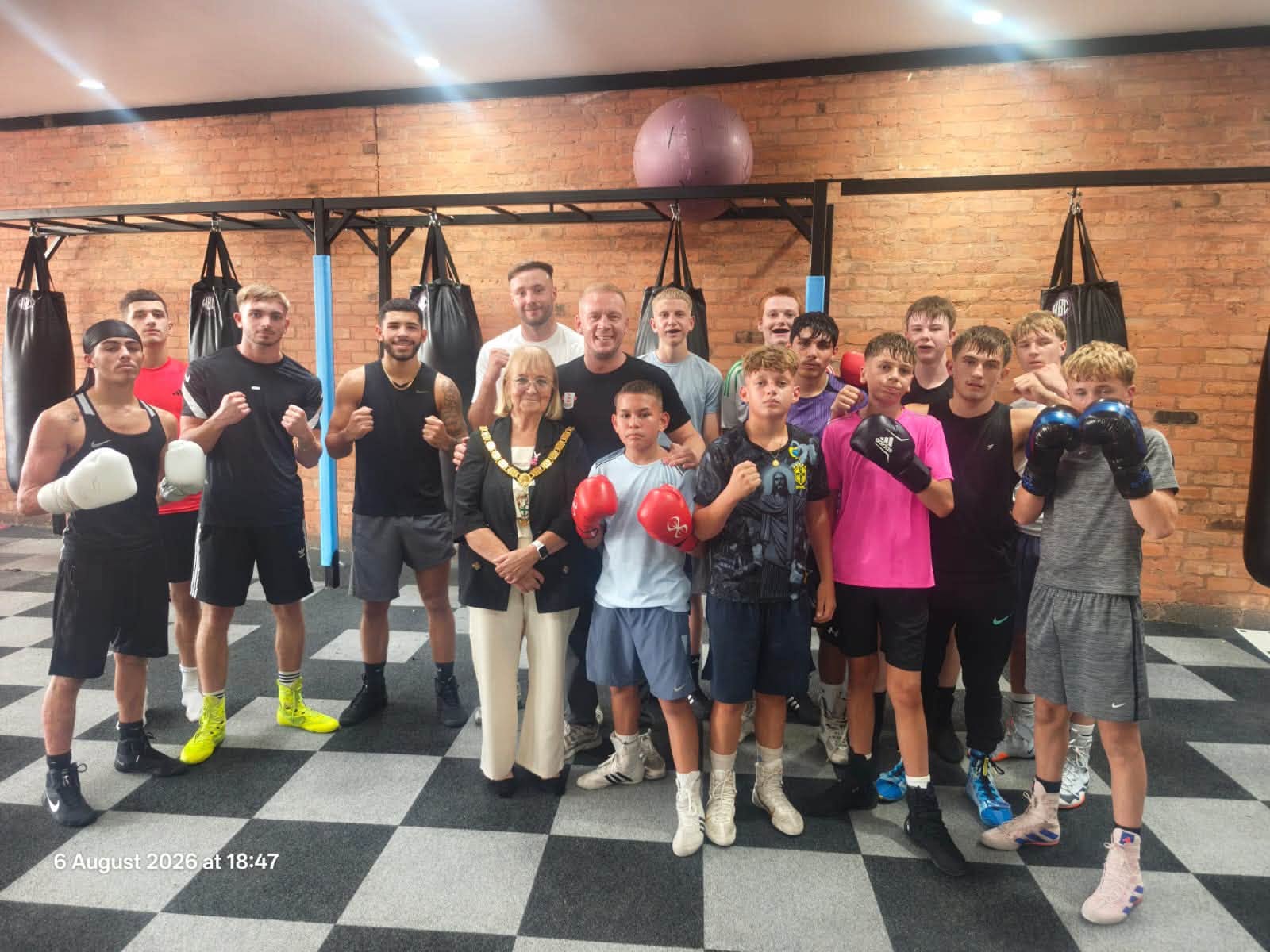
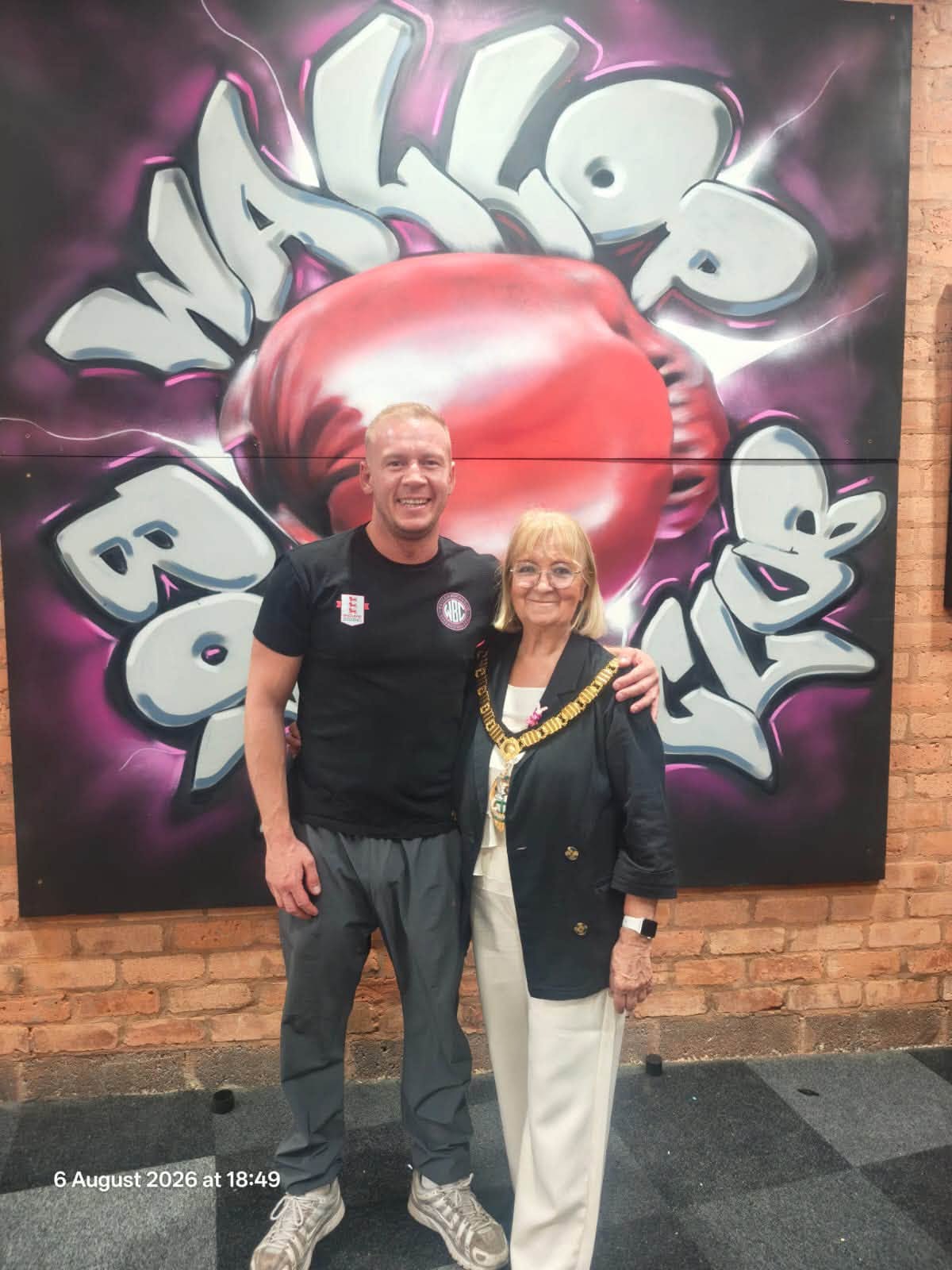
Last week, the Mayor of Redditch, Cllr Susan Eacock, and her Consort Cllr Nik Price paid an official visit to Wallop. They came to meet the club's squad and its founder, Carl Dickens, and to see for themselves what has been quietly building on Carl's mats for some time now.
They left, they said afterwards, impressed. "It was incredible to see just how hard the boxing squad train," the Mayor told me. "The fitness, discipline and sheer determination they put into every session is outstanding. Carl's commitment to the young people of Redditch shines through in everything he does."
Anyone who has spent five minutes with Carl Dickens will recognise that description. There is a particular kind of coach who does not tell young people what they can be; he simply expects it of them and lets the training do the persuading. Carl is that kind of coach.
What Wallop is doing that most clubs are not
Boxing clubs are two-a-penny across the country. What makes Wallop different is what happens alongside the boxing.
Carl has built a structured Boxing and Mentoring programme designed for young people who are often the last to be reached by traditional sport or by traditional support services. In particular, the programme is targeted at young people with Special Educational Needs and Disabilities, including those with Speech, Language and Communication Needs and Social, Emotional and Mental Health needs.
Boxing is used here not for its own sake but as a tool. A properly structured session offers something these young people rarely find in a school classroom. It offers routine. It offers clear expectations. It offers a coach who is fully present. It offers a physical outlet that helps with self-regulation. And critically, it offers success that is earned rather than given.
Around the ring itself sits a mentoring wrap. Emotional literacy. Goal setting. Resilience. Transitions into education, training or work. This is the kind of one-to-one relationship that statutory services increasingly struggle to sustain in the current financial climate, and that community organisations like Wallop are quietly stepping in to provide.
Why Redditch, and why now
Wallop is not a nice-to-have. It is a response to a genuine problem.
Almost one in five children under the age of 16 in Redditch is growing up in a relatively low-income family. That figure comes from Worcestershire's own Joint Strategic Needs Assessment. It is one of the highest rates in the county. Financial hardship is a well-documented barrier to participation in community sport, mentoring and after-school activity. The children who could most benefit from a place like Wallop are often the least likely to walk through its doors, because their families cannot afford the fees or the transport.
Carl has responded to that head-on. Sessions at Wallop are subsidised so that participation is not gated by household income. The club sits in an accessible location in town, cutting the transport barrier that would otherwise be prohibitive for many.
At the same time, demand for SEND support across our town and county is rising sharply, while statutory support services are under pressure. Community-based, preventative interventions have never mattered more. Wallop is exactly that.
What success looks like
The programme is not being run on hope. It is measured. The targets built into Wallop's model include a 70 per cent six-month retention rate among participants, improvement in Strengths and Difficulties Questionnaire scores, and evidence of stronger school engagement and reduced exclusions for young people going through the programme. There is also family-level feedback: parents and carers who report feeling less isolated and more confident supporting their children.
These are the outcomes that change trajectories. A young person who learns to regulate their emotions at 12 does not need crisis intervention at 17. A parent who feels less alone is a parent better able to advocate for their child. A community that invests in its young people, particularly those with additional needs, is a community that gets stronger.
Standing in Wallop's corner
The Mayor was right to visit Wallop. This is exactly the kind of local, human-scale work that too often flies below the radar while headlines are grabbed by big projects and glossy launches. Carl Dickens is not a headline. He is something better. He is a man who has built something that quietly works for the young people who need it most.
If you would like to know more about Wallop Boxing Club, or to support Carl's work, please get in touch with the club directly. If you are a parent or carer of a young person who might benefit from the programme, do the same.
And if you happen to walk past Wallop in the evenings and hear that steady percussion of gloves on pads, that is not just training. That is a young life, quietly finding its footing.